Generated from the same source the product reads.
Thirty files: five arrangements, three size bands, positive and reversed. The wordmark in every one is outlined, so none of them needs Sentient to render correctly.
Each band is previewed at a size inside its own range, so the three read as three sizes rather than three identical pictures with different captions.
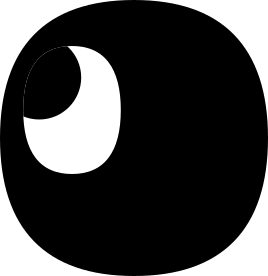
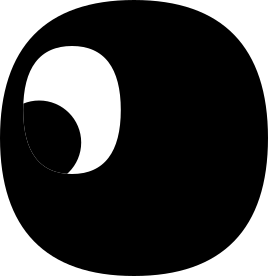
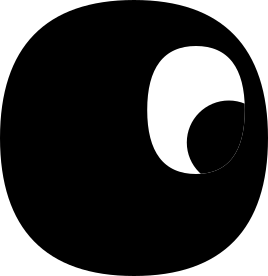
Twenty-five variants sharing the outer contour exactly. Nine glances, eight turns and eight profiles. For the places a product can afford a little life; none of them replaces the primary mark.
Two files. Take the primitives if you are building something from scratch, the tokens if you are building an interface — a component should be asking for a surface, not for step 400.
The same scales, split up. For a surface that needs one family and not the other seven — a marketing page, an email, a slide.
Three faces, all free to use. None is bundled here — take them from the source so you get the licence with them.
The thirteen-step ladder as custom properties: size, leading and tracking for every step, and the density setting that moves all of them together.
The mark’s outer contour on its own, as a clip path. For masking an image or a field of colour into the shape without redrawing it.
The same lockups, in one file each, with the mark following the pointer. Open one directly or inline it in a page and it looks at your cursor; put it in an <img>, where scripts do not run, and what is left is the correct static lockup.
One file rather than two, because the wordmark is positioned arithmetically against the mark inside it. Two files in a row have to be aligned by whoever places them, and the thing they get wrong is centring the wordmark’s ink box — ascender to descender — instead of its cap box, which drops the type by about two pixels at bar size.